
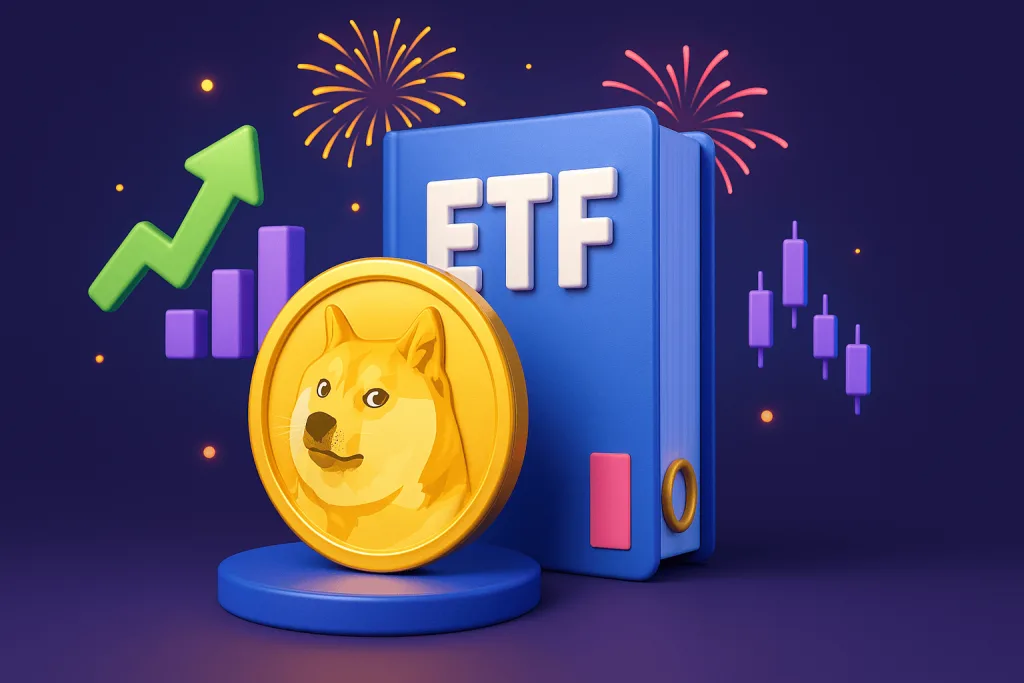
At first, no one took it seriously. Not the internet. Not the financial world. Certainly not Wall Street. Dogecoin, born in 2013 from a blend of open-source code and online sarcasm, was the ultimate crypto inside joke. Its logo? A Shiba Inu with a puzzled look. Its origin? A spoof on the sudden rise of Bitcoin. And yet, somehow, here we are—over a decade later—staring at the launch of the first-ever US Dogecoin ETF.
If this feels like a punchline that’s gone too far, you’re not alone.
The Joke’s on Wall Street
This week, financial markets welcomed DOJE, the Dogecoin ETF created by RexShares and Osprey Funds. But this isn’t your typical crypto ETF. It wasn’t approved under the standard Securities Act of 1933 like Bitcoin ETFs. Nope. This one came through the backdoor of the Investment Company Act of 1940, a structure usually reserved for mutual funds.
Instead of holding Dogecoin directly, the ETF gains exposure via a Cayman Islands subsidiary and derivatives—a setup designed to satisfy the 1940 Act’s rules around diversification and risk management. It’s complex. It’s technical. It’s also, some say, unnecessary.
Because let’s be honest: if you wanted Dogecoin that badly, couldn’t you just open an app and buy it in five minutes?
So Why Bother?
That’s the million-DOGE question. For critics, this ETF is just a shiny wrapper around what’s essentially speculative candy. After all, Dogecoin has unlimited supply, inflationary tokenomics, and a history of meme-fueled price spikes. It dishes out 10,000 new coins every minute—about 5 billion DOGE a year. That’s not scarcity. That’s a firehose.
Now we have reached an even more fascinating fact. It’s the fact that serious blockchain projects, like the ones building scalable tech, real-world utility, and decentralized infrastructure are still waiting in the regulatory queue. Meanwhile, the coin that started as a joke originating from a meme, has leapfrogged them all to the ETF finish line.
“It’s like putting whipped cream on a paper plate and calling it a gourmet dessert,” said one analyst. “Fun? Sure. Fulfilling? Debatable.”
But Maybe That’s the Point
Dogecoin, for all its chaos, represents something real: community momentum. You can’t explain its rise without talking about Elon Musk’s tweets, Reddit threads, TikTok trends, and millions of small-time traders who felt, just for a moment, like they were part of something big. It was less about the tech, more about the vibe.
And in today’s markets, vibes move money.
That’s what makes the Dogecoin ETF such a strange but fitting milestone. It’s the collision of two worlds: one fueled by institutional caution and paperwork, the other by internet culture, irony, and hope. Whether you’re a hedge fund manager or a college student with $100 and a Robinhood app, Dogecoin has always had a way of pulling you in.
Mike Maloney of Incyt put it this way: “Community matters. Memes matter. And this ETF is proof that sometimes the market listens—not just to logic, but to people.”
The Road Ahead
Will more memecoins follow? Maybe. Applications are already in the pipeline for tokens like Bonk and even one tied to Donald Trump’s online presence. But the SEC isn’t making this a free-for-all. Liquidity, surveillance, and proper custody still matter, and Dogecoin’s strange maturity—having weathered multiple crypto winters—gave it a surprising edge.
Even so, the ETF launch hasn’t quieted the debate. Is this a step forward for accessibility and legitimacy—or just Wall Street learning how to profit off memes?
Probably a bit of both.
Because in the end, the Dogecoin ETF isn’t about whether memes belong in serious finance. It’s about the fact that they’re already there—and the system is learning to catch up.
One thing’s for sure: the line between joke and juggernaut has never been blurrier.
And for Dogecoin? Well, much wow.